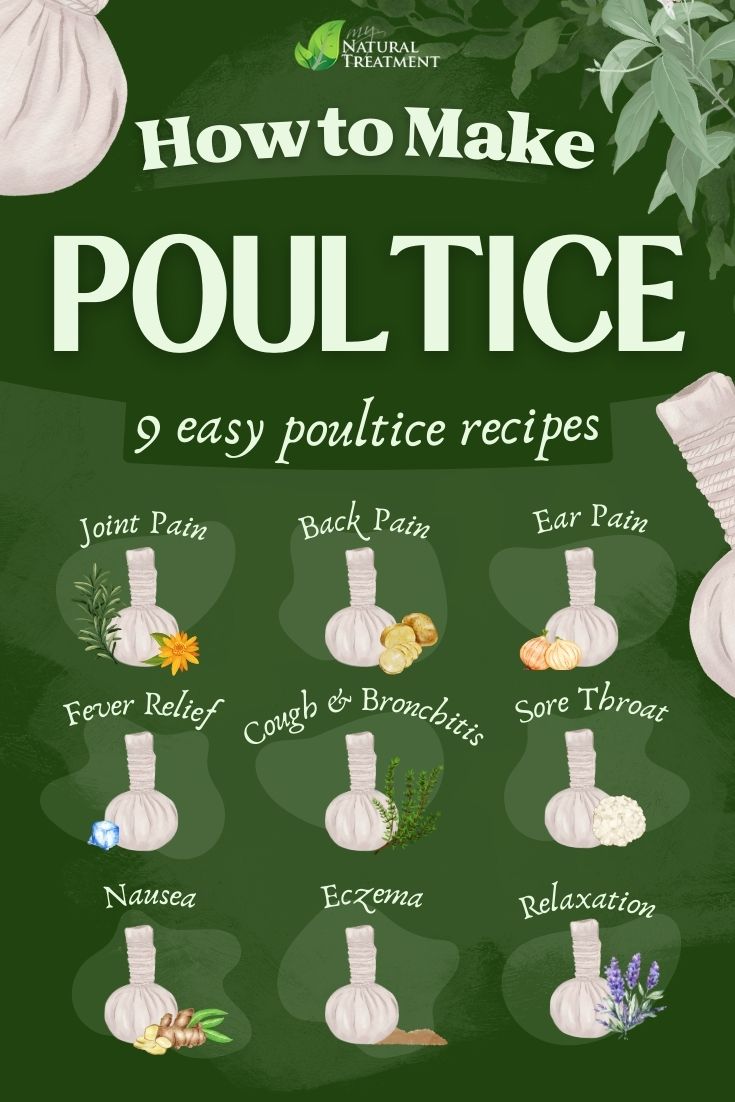
Want to know what is a poultice and how to make poultices at home for all sorts of health issues? Discover 9 poultice recipes.
Poultices have been used for centuries as natural remedies to soothe pain, reduce inflammation, and treat common ailments like colds and skin irritations. But what exactly is a poultice, and how can you make one at home? In this article, we’ll explore the benefits of poultices, explain how they work, and provide 9 simple and effective poultice recipes for pain relief, respiratory issues, and more. Whether you’re looking for natural healing solutions or DIY remedies, this guide has you covered!
In This Article You Will Find:
What Is a Poultice
A poultice is a soft, moist mixture of herbs, clay, or other natural ingredients applied directly to the skin to relieve pain, reduce inflammation, or treat wounds and infections. Some poultices are also used for relaxation purposes, as you will see below.
Did you know? 3,500 years ago, the Egyptians treated their bodily aches with hot mud poultices extracted from the Nile.
Warm vs Cold Poultices
Warm Poultices
Warm poultices have a calming and relaxing effect, stimulate blood circulation, and improve lymph flow, enhancing the body’s oxygen supply. Heat is recommended for chronic pain (such as arthritis) and for clearing mucus (bronchitis, sinusitis, and nasal congestion). Always test the poultice temperature on your arm first to avoid burns.
Cold Poultices
Cold poultices are recommended for acute pain (such as stings, burns, or sore throat). However, some people cannot tolerate cold treatments, so it’s important to assess whether the pain subsides. If discomfort persists, the treatment should be discontinued.
9 Poultice Recipes for Pain Relief, Colds, and More
1. Rosemary and Arnica Poultice for Rheumatic Pain
This rosemary and arnica poultice soothes acute rheumatic pain.
How to Apply: Mix equal parts of rosemary and arnica-infused oils with water. Soak a linen towel in the solution, wring it out, and wrap it tightly around the affected joint. Secure the compress with a cotton cloth and leave it on for 2 hours. Burdock root poultice is also amazing for joint pain.

2. Potato Poultice for Back Pain
Warm potatoes relax tense back muscles.
How to Apply: Boil 2-6 potatoes until soft. Wrap them in paper, then a dish towel. Mash them into a 2 cm layer and apply the poultice to the painful area, ensuring it is at a comfortable temperature. Secure with a wool scarf and leave it on for one hour. Learn also how to make comfrey root poultice for mild sprains.
3. Onion Poultice for Ear Pain
Onions contain essential oils and sulfur compounds, acting as a natural antibiotic to relieve ear pain.
How to Apply: Peel and quarter an onion. Separate the layers and place them curved side up on a kitchen towel. Fold the towel into a flat packet, press to release juices, and warm it slightly (e.g., between two hot water bottles). Apply it to the ear, cover with a heated terry cloth towel, and secure with a hat. Leave it on for at least 20 minutes.

4. Poultice for Fever Relief
This classic home remedy helps reduce fever.
How to Apply: Once the fever stabilizes, lay a large towel under your calves. Soak two dish towels in water that is 10 degrees C cooler than the your body temperature. Wring out the towels, wrap one around each calf, and cover with terry cloth towels. Repeat the process 3-4 times when the wraps warm up. If you have cold feet, warm them first with wool socks.
5. Thyme Poultice for Cough and Bronchitis
Thyme essential oils have antiviral properties and soothe the respiratory tract.
How to Apply: Steep 2 teaspoons of dried thyme in 1/2 liter of boiling water for 10 minutes. Strain the tea and let it cool to a comfortable temperature. Soak a cotton towel in the tea, wring it out, and place it on your chest. Cover with a terry cloth towel and a wool scarf. Leave it on until it cools.
No products found.
6. Cottage Cheese Poultice for Burns and Sore Throat
This poultice cools overheated, overworked joints, soothes trauma-induced pain (bruises), and works wonders for sore throats. The moisture in cottage cheese reduces inflammation, absorbs excess heat, and relieves swelling.
How to Apply: Spread a 1/2 cm thick layer of slightly warm cottage cheese on a cotton cloth. Place it on the affected area and wrap it with a scarf or dish towel. Leave it on for 20-30 minutes. Repeat up to 3 times daily if needed.
7. Ginger Poultice for Digestive Issues
The spicy oils in ginger root combat digestive problems and nausea.
How to Apply: Pour 150 ml of hot water over 2 tablespoons of grated ginger root. Let it steep for 10 minutes and strain. Fold a cotton towel to fit the abdomen, soak it in the liquid (add more water if needed), and wring it out. Use gloves to avoid burns. Place the compress on the abdomen, cover it with a terry cloth towel, and then a wool scarf. Leave it on as long as it feels pleasant.
8. Clay Poultice for Eczema
The minerals in clay (loess) and the cooling effect during drying help heal eczema.
How to Apply: Mix 7 parts clay with 2 parts cold water to form a paste. Spread a layer of paste on a kitchen towel, fold it, and apply it with the coated side against the inflamed area. Secure the poultice with a towel and leave it on as long as it feels pleasant. Repeat several times daily if necessary. Another amazing poultice for eczema is the celandine one.
9. Lavender Poultice for Relaxation and Sleep Aid
Lavender flowers contain essential oils with a relaxing effect, helping you sleep better after a stressful day.
How to Apply: Before bedtime, place 5 drops of lavender essential oil on a paper towel or cloth handkerchief. Apply the compress to your chest, cover it with a pre-warmed soft terry cloth towel, and secure it with a snug undershirt. Leave it on overnight.
No products found.
Tips on How to Use a Poultice
- To avoid stressing the body, limit yourself to just one type of poultice per day to treat the most severe symptom first.
- Poultices should be complemented by bed rest, both while they are in action and afterward.
- After removing the poultice, remain lying down for at least 15 minutes.
Read Also: How to Make Burdock Root Poultice for Joint Pain
Poultices are a powerful and natural way to address pain, inflammation, colds, and even skin conditions—right from the comfort of your home. With these 9 easy poultice recipes, you’re now equipped to create your own remedies using simple, natural ingredients. Ready to try one? Let us know your experience in the comments, and don’t forget to share this guide with friends and family looking for natural healing solutions!
Share on Pinterest ❤️